The Immortal Game: Why One Chess Match from 1851 Still Captivates Us
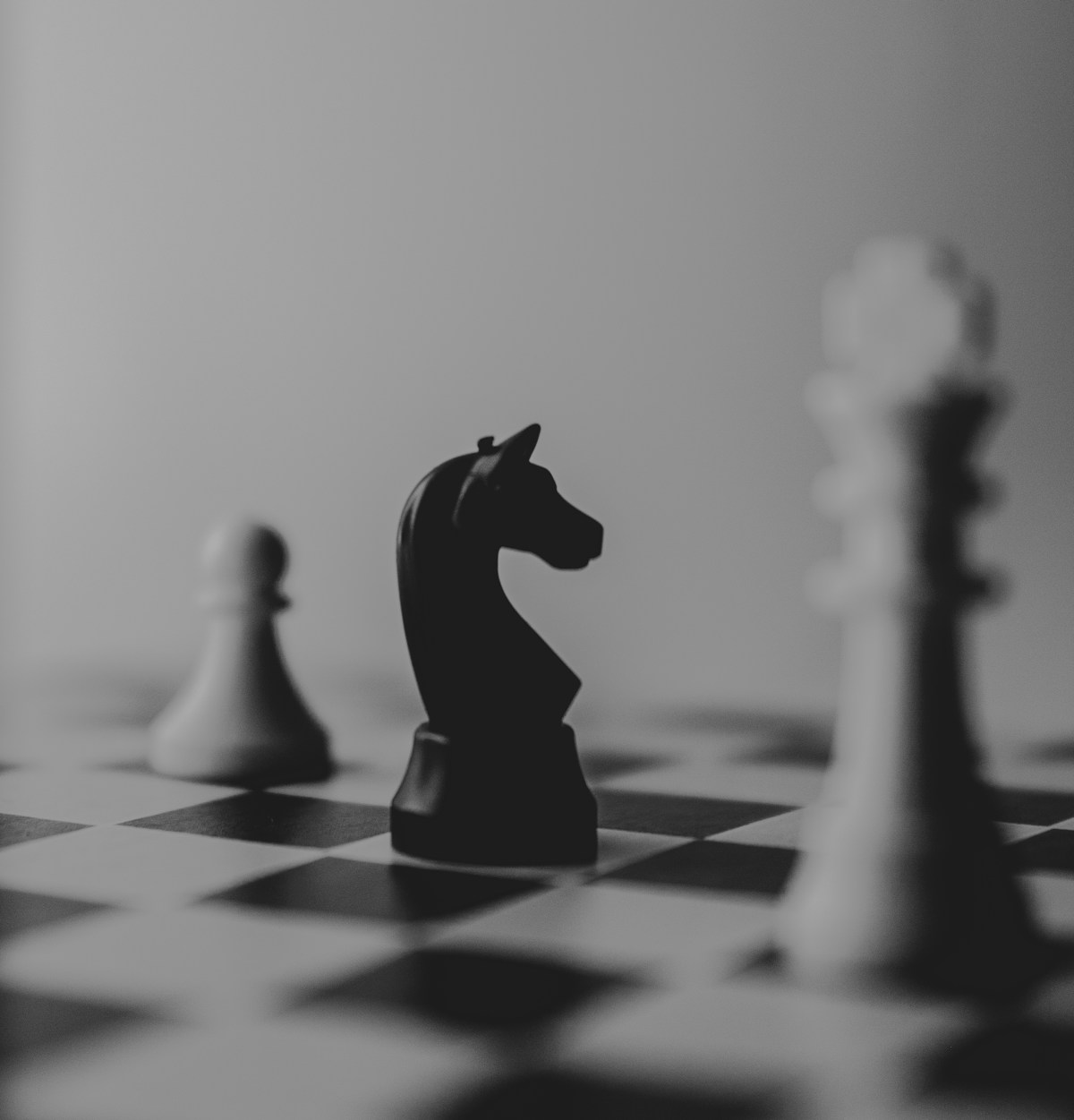
London, 1851
It wasn't even a tournament game. Adolf Anderssen and Lionel Kieseritzky sat down for a casual match during the first international chess tournament in London. No clock. No prize money. No audience beyond a few curious onlookers. What followed was 23 moves that would be studied, debated, and marveled at for the next 175 years.
Anderssen, playing White, sacrificed a bishop, both rooks, and his queen — virtually his entire army — to deliver checkmate with just three minor pieces. The game was so audacious, so beautiful in its logic, that it earned a name: The Immortal Game. It remains one of the most famous chess games ever played, not because of its competitive stakes (there were none) but because of what it represents: the possibility of beauty in pure strategy.
The Moves That Shocked the World
The game begins with a King's Gambit — one of the most romantic and aggressive openings in chess. White offers a pawn to seize the center and open lines for attack. Kieseritzky accepts and the game descends into tactical chaos almost immediately.
By move 11, Anderssen has already sacrificed his bishop on a seemingly reckless diagonal. By move 18, he gives up a rook. On move 19, the second rook goes. By move 22, the queen — the most powerful piece on the board — is offered as well. To a modern engine, many of these sacrifices weren't objectively best play. Kieseritzky had chances to defend. But that's not the point.
The point is that Anderssen saw a vision — a checkmate pattern requiring the coordinated movement of three minor pieces across a wide-open board — and he played for it with total commitment. Every sacrifice served the geometry of the final position. When the checkmate lands on move 23, with bishop, knight, and another bishop delivering the blow while Black's queen and rooks stand helplessly on the other side of the board, it feels less like a chess game and more like a poem.
What Makes a Chess Game Beautiful?
This is a question that has fascinated chess players and aestheticians for centuries. The mathematician G.H. Hardy, in his essay A Mathematician's Apology, argued that chess beauty, like mathematical beauty, comes from the unexpected inevitability of a combination — the sense that something surprising was actually the only logical conclusion all along.
The Immortal Game has this quality in abundance. Each sacrifice looks absurd in isolation. Who gives up their queen with no immediate tactical payoff? But when you see the full sequence — how every sacrificed piece opened a line or deflected a defender for the final mating net — it stops looking like recklessness and starts looking like architecture. Anderssen wasn't throwing pieces away. He was building something.
Modern chess aesthetics research, including a 2015 study from the University of Oxford, found that chess players and non-players alike respond to beautiful chess combinations with brain activity similar to that triggered by visual art and music. The appreciation of a brilliant sacrifice activates the same neural circuits as looking at a Caravaggio painting. Beauty, it turns out, is beauty — whether it's expressed in paint, sound, or coordinated piece movement.
The Romantic Era of Chess
The Immortal Game emerged from what chess historians call the Romantic Era — a period roughly spanning the early to mid-1800s when attacking play, sacrificial combinations, and daring gambits were valued above all else. Players weren't trying to grind out advantages with careful positional play (that would come later, with Wilhelm Steinitz and the "scientific" school). They were trying to create something beautiful.
The Romantic Era produced some of chess's greatest spectacles. Alongside the Immortal Game, there's "The Evergreen Game" (also by Anderssen), Paul Morphy's Opera Game, and dozens of other brilliancies where material was secondary to the elegance of the combination. These games were admired the way great performances are admired — for their artistry, not their efficiency.
Modern chess, dominated by engines and preparation, has largely moved away from this style. Today's top games are marvels of precision, but they rarely produce the gasp-inducing sacrificial combinations of the Romantic Era. There's a reason casual fans can name "The Immortal Game" but probably can't name a game from last year's World Championship — romance is memorable in a way that correctness isn't. This tension between beauty and accuracy is part of what makes different chess cultures so fascinating — some still prize creativity over correctness.
Why It Still Matters
The Immortal Game endures because it represents something we all respond to: the triumph of vision over material. Anderssen didn't win because he had more pieces. He won because he saw further, thought more creatively, and committed fully to an idea that looked insane on the surface but was deeply logical underneath.
That's a principle that extends far beyond chess. The best decisions in business, art, science, and life often look like sacrifices to outside observers. Quitting a stable job to pursue something meaningful. Investing time in a skill with no obvious payoff. Giving up something good to pursue something great. The logic only becomes visible in hindsight, when all the pieces of the combination come together — the same kind of decision-making under pressure that chess trains us for.
The Immortal Game also reminds us that chess is, at its core, an art form. Not just a competition, not just a puzzle, but a medium for creative expression. The board is a canvas. The pieces are a vocabulary. And every now and then, someone uses them to create something truly beautiful. That spirit lives on in the modern chess renaissance, where millions are rediscovering the game's depth and beauty.
That's worth celebrating — in 1851 and in 2026.
Sources & Further Reading
- The Immortal Game — Full Analysis — Chess.com's move-by-move breakdown
- Chess, Cognition, and the Brain (Frontiers in Psychology) — How chess beauty activates neural circuits
- Chaturanga: Origins of Chess — The 1,500-year journey from India to the world
- Chess Across Cultures — The Morning Move
- Why Chess Is Having a Renaissance — The Morning Move
- Decision-Making Under Pressure — The Morning Move
Experience the beauty of chess every morning. The Morning Move delivers a daily puzzle and something positive to start your day — because great mornings start with great thinking. Sharpen your tactics at enPuzzant.com.